


Professional Whitening
To love beauty is taste. To create beauty is art
Whitening is an aesthetic procedure suitable for anyone who wants an attractive, radiant smile. The procedure is remarkably accessible and shows a visible effect after the very first visit.
There are two types of professional teeth whitening - in-clinic and take-home professional whitening. Both require a visit to the clinic in person.
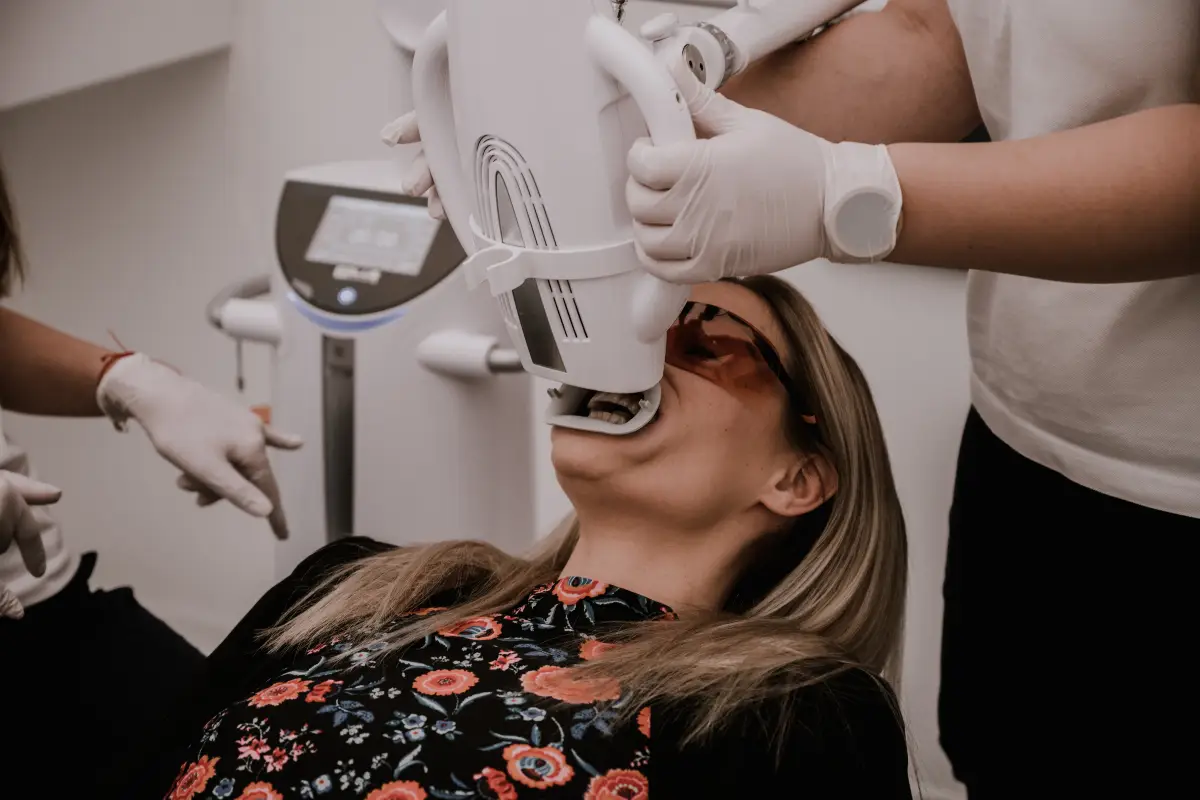
In-clinic professional whitening is done in the dental chair. To begin, a special liquid protector is applied to your gums to keep them fully protected. Then a special whitening gel is applied to the front surface of the tooth and activated with ultraviolet light. Once activated, the gel penetrates the microscopic pores of the tooth, where stubborn stains from food, drinks and smoking build up over time, and dissolves them. We'll apply the whitening gel several times, each application bringing us closer to the white smile you want.
After the very first procedure your teeth will become up to 7 shades whiter, and if you follow our aftercare advice, this effect will last for a long time.
Take-home professional whitening also requires a visit to the clinic, so we can scan your teeth and, from that digital impression, create custom whitening trays just for you. They'll fit your teeth perfectly, and depending on the therapy we choose, you'll combine them with a daytime or nighttime whitening gel. With the daytime gel you can do your whitening for a few hours a day, or leave the gel to work overnight.
During your visit, in addition to the necessary set of professional products and the custom whitening trays made especially for you, we'll also give you detailed instructions on how to use the kit correctly and how to maintain and enhance the whitening effect over time.
Can whitening damage the enamel?
When whitening is performed under the supervision of a dental professional and with professional products, there is no danger to your teeth at all.
The professional whitening gel cannot in any way alter or damage the structure of the enamel. The whitening gel reacts only to the organic compounds that make up the deep-set stains. The tooth itself is inorganic in nature.
Is the procedure painful?
The procedure is not painful and doesn't require anesthesia. In rare cases there is mild discomfort from increased sensitivity, but this effect passes within a day or two.
What result can I expect?
After the very first procedure your teeth will become up to 7 shades whiter.
How long does the effect of the procedure last?
With proper maintenance and good oral hygiene, the effect of the procedure is exceptionally long-lasting.
How often should teeth whitening be done?
To boost and maintain the effect, a series of procedures (2 or 3) can be done every few months. Combining in-clinic professional whitening with maintenance therapy using a take-home professional whitening system also works extremely well.
What about alternative whitening methods like baking soda, activated charcoal, turmeric, walnut shells, lemon?
We respect folk medicine and the power of herbs, but only when there is scientific evidence behind the use of these methods. Knowing the structure of teeth perfectly, as well as the causes of their darkening, we don't recommend scrubbing their surface with baking soda, activated charcoal or lemon, for example, because this not only makes a lasting whitening effect impossible, but also puts your health at serious risk. These abrasive and highly acidic substances will seriously and irreversibly damage your enamel. That's why we recommend not making needless experiments, but consulting a dental specialist instead.
Professional whitening will make your smile shine again