

We choose long-term solutions, not compromises
The ugly truth about basal implants, or why we work only with multi-part implants – for the good of your health
Dental implants are revolutionary for modern dentistry, restoring function, aesthetics and confidence for patients after tooth loss.
In our clinic we've never used basal implants – why?
Key differences – why multi-part implants are preferred
| Characteristic | Multi-part (classic) implants | Basal implants |
|---|---|---|
| Stability and osseointegration | They support full osseointegration – meaning that over time the implant becomes an inseparable part of the bone, ensuring long-lasting stability with a proven success rate of over 95 % (with proper daily cleaning of the teeth after placement). | They don't provide osseointegration, but hold mechanically onto the bone ("osseo‑fixation"). This often leads to progressive bone resorption (melting away of the bone), infection, inflammation and risks of loss after a few months or years. |
| Flexibility in prosthetic work | The multi-part system allows parts of the restoration to be replaced – abutments, adjustments or remaking a crown when necessary. | The monolithic structure of these implants is the reason why any change required over time involves a complete reconstruction. |
| Risks and complications | Minimal risk of implant loss with good oral hygiene and preventive care . | Frequent complications: infections, chronic sinusitis, gingival recession, an increased risk of bone and implant loss. |
| Regulatory status and clinical evidence | Approved by the FDA and established in theory and practice by long-standing clinical studies and data. | Frequent complications: infections, chronic sinusitis, gingival recession, an increased risk of bone and implant loss. |
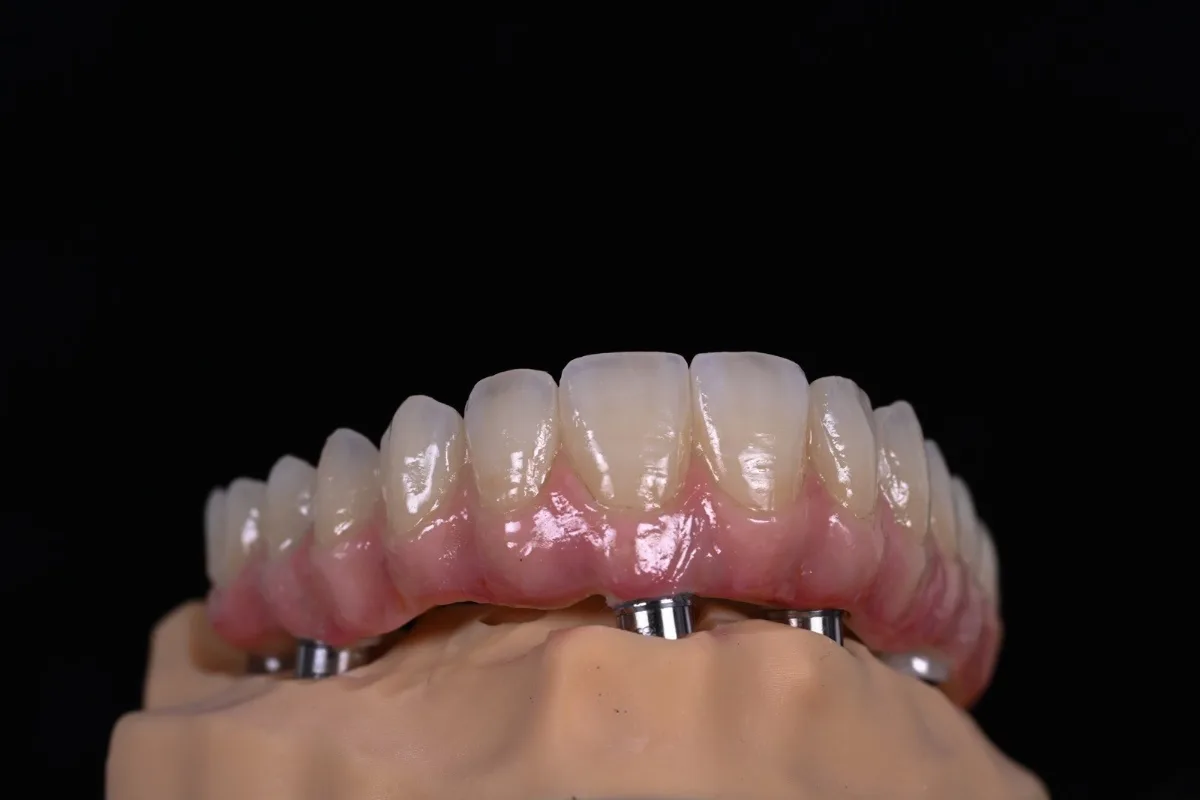
| Bone deficiency – how it's addressed | They allow bone augmentation, sinus lift, placement of tilted implants or All-on-4/All-on-6 – all modern techniques with proven results. | They're presented to patients as a quick solution, without bone augmentation, but demonstrate a higher risk of loss. |
In our practice we rely on multi-part (classic) implants, because:
- They provide a real, long-lasting bond with the bone,
- They allow flexible prosthetic work and easy maintenance,
- They have proven reliability and regulatory approval,
- The risks with them are significantly more manageable.
- By choosing a multi-part system we guarantee a personalized, safe and durable result for every smile.
- It's no coincidence that our patients receive a 50-year warranty on all implants placed at the clinic.
Frequently asked questions
If I have little bone, does that mean I have no chance for implants? The bone can be rebuilt using modern dental methods and the implants placed afterward, in case we don't have a stable foundation at the start.
Can I get basal implants and then replace them with classic ones? It's not advisable. That's why it's important to make the decision carefully and in consultation with a specialist.
Is the implant placement procedure painful? Modern implantology uses gentle methods, minimally invasive techniques and local anesthesia. Most patients say the sensation after the procedure is much milder than expected and don't complain of complications such as pain and swelling.
Is maintaining the placed implants complicated? Caring for implants is no more complicated than caring for natural teeth – regular brushing, flossing and check-ups are entirely enough for a long-lasting result.
„Implants aren't for older people“ – a MYTH! There's no upper age limit for placing implants. Age is no obstacle – what matters is the general state of health and having enough bone to place them.
A closing word from Dr Riahi
When we turn to solutions involving implant placement, we have no right to compromise. I believe only in long-term solutions – ones that protect the health of the bone, allow adaptation over time and are based on proven science. That's exactly why in our practice we use only multi-part implants – systems that offer predictability, safety and freedom for both the dentist and the patient.
Every treatment should begin with analysis and end with trust and a smile you can rely on for years to come.
Get in touch with us for a consultation and take the first step toward a lasting solution for your smile.
Tags
Related Articles
The advantages of the All-on-4 method: when four implants bring back your whole smile
A stable, fixed structure on four implants — shorter treatment and restored function.

Bonding – the fast track to a perfect smile
Aesthetic correction of shape, fractures and gaps in a single visit, without grinding down the teeth.

Your smile is a project in which you're the main character
How we plan a new smile step by step — with digital design and your input at every stage.